Rockin' Classics
Johann Sebastian Bach
Johann Sebastian Bach was a German composer and musician of the late Baroque period. He is known for his prolific output across a variety of instruments and forms, including orchestral music such as the Brandenburg Concertos; solo instrumental works such as the cello suites and sonatas and partitas for solo violin; keyboard works such as the Goldberg Variations and The Well-Tempered Clavier; organ works such as the Schubler Chorales and the Toccata and Fugue in D minor; and choral works such as the St Matthew Passion and the Mass in B minor. Since the 19th century Bach Revival, he has been generally regarded as one of the greatest composers in the history of Western music.
The Bach family already counted several composers when Johann Sebastian was born as the last child of a city musician, Johann Ambrosius, in Eisenach. After being orphaned at the age of 10, he lived for five years with his eldest brother, Johann Christoph, after which he continued his musical education in Lüneburg. In 1703 he returned to Thuringia, working as a musician for Protestant churches in Arnstadt and Mühlhausen and, for longer periods, at courts in Weimar, where he expanded his organ repertory, and Köthen, where he was mostly engaged with chamber music. In 1723, he was hired as Thomaskantor (cantor at St Thomas's) in Leipzig. There, he composed music for the principal Lutheran churches of the city and its university's student ensemble Collegium Musicum. In 1726, he began publishing his keyboard and organ music. In Leipzig, as had happened during some of his earlier positions, he had difficult relations with his employer. This situation was somewhat remedied when his sovereign, Augustus III of Poland, granted him the title of court composer in 1736. In the last decades of his life, Bach reworked and extended many of his earlier compositions. He died of complications after a botched eye surgery in 1750 at the age of 65.
Bach enriched established German styles through his mastery of counterpoint, harmonic and motivic organisation, and his adaptation of rhythms, forms, and textures from abroad, particularly Italy and France. His compositions include hundreds of cantatas, both sacred and secular. He composed Latin church music, Passions, oratorios, and motets. He often adopted Lutheran hymns, not only in his larger vocal works but, for instance, also in his four-part chorales and his sacred songs. Bach wrote extensively for organ and for other keyboard instruments. He composed concertos, for instance for violin and for harpsichord, and suites, as chamber music as well as for orchestra. Many of his works employ contrapuntal techniques like canon and fugue.
In the 18th century, Bach was primarily valued as an organist, while his keyboard music, such as The Well-Tempered Clavier, was appreciated for its didactic qualities. The 19th century saw the publication of some significant Bach biographies, and by the end of that century, all of his known music had been printed. Dissemination of scholarship on the composer continued through periodicals (and later also websites) exclusively devoted to him and other publications such as the Bach-Werke-Verzeichnis (BWV, a numbered catalogue of his works) and new critical editions of his compositions. His music was further popularised through a multitude of arrangements, including the Air on the G String and "Jesu, Joy of Man's Desiring", and of recordings, such as three different box sets with complete performances of his oeuvre marking the 250th anniversary of his death.
Source : Wikipedia

1748 portrait of Bach, showing him holding a copy of the six-part canon BWV 1076
Born : 21 March 1685 (O.S.)
31 March 1685 (N.S.)
Eisenach
Died : 28 July 1750 (aged 65)
Leipzig
Brandenburg Brandenburg Concerto No. 1 in F Major, BWV 1046: I. [Allegro]
Orchestral Suite No. 3 in D Major, BWV 1068: II. Air
French Suite No. 1 in D Minor, BWV 812
Cello Suite No. 1 in G Major, BWV 1007: I. Prélude
Toccata and Fugue in F Major, BWV 540
Toccata and Fugue in D minor, BWV 565
Prelude and Fugue: No. 1 in C Major, BWV 846
Prelude and Fugue No.2 in C Minor, BWV 847

Johann Sebastian Bach
Brandenburg Concerto No. 3 in G Major, BWV 1048: I. [Allegro]
Berliner Philharmoniker · Herbert von Karajan

The Nice
Ars Longa Vita Brevis
Prelude
1st Movement – Awakening
2nd Movement – Realisation
3rd Movement – Acceptance "Brandenburger"
4th Movement – Denial
Coda – Extension to the Big Note
From the album "Ars Longa Vita Brevis"
Released in November 1968.
3rd Movement (10:30 min) of Ars Longa Vita Brevis, "Acceptance 'Brandenburger'", is a rock adaptaion of Bach's Brandenburg Concerto No. 3 in G Major, BWV 1048: I. [Allegro].
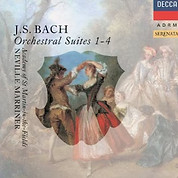
Johann Sebastian Bach
Orchestral Suite No. 3 in D Major, BWV 1068: II. Air
Performed by Academy of St Martin in the Fields conducted by Sir Neville MarrinerPeter Hurford.
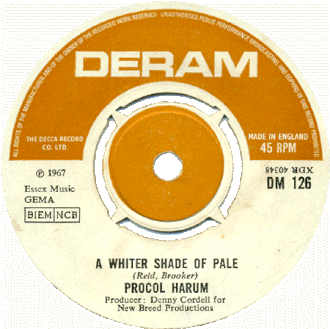
Procol Harum
A Whiter Shade of Pale
45" single "A whiter Shade of Pale / Lime Street Blues"
Released on 12 May 1967.
The opening Hammond organ line and the whole sound of music is an inspiration from J.S. Bach's Air from his Orchestral Suite No. 3, Second movement Air, BWV 1068, (the "Air on the G string").

Annie Haslam
Still Life
From the album "Still Life".
Released in 1985.
This is an interpretation of Suite 3 Movement 2 (the "Air on the G string") with lyrics by Betty Thatcher.
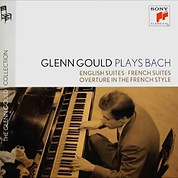
Johann Sebastian Bach
French Suite No. 1 in D Minor, BWV 812.
Performed by Glenn Gould.

Emerson Lake and Palmer
Knife Edge
From the album "Emerson Lake and Palmer"
Released on 20 November 1970.
Knife-Edge" is based on the first movement of Leoš Janáček's orchestral piece Sinfonietta (1926),with an instrumental middle section that includes an extended quotation from the "Allemande" of Johann Sebastian Bach's "French Suite No. 1 in D minor, BWV 812", but played on an organ rather than a clavichord or piano. song starts with an interpolation of Johann Sebastian Bach's "Toccata and Fugue in D minor" and interpolates Edvard Grieg's "In the Hall of the Mountain King" (02:13 min).
The arrangement also appears on "In Concert" live album of Emerson Lake and Palmer.

Johann Sebastian Bach
Cello Suite No. 1 in G Major, BWV 1007: I. Prelude.
Performed by Yo-Yo-Ma.

Genesis
Horizons
From the album "Foxtrot"
Released on 15 September 1972.
"Horizons", performed by Hackett is a musical inspiration from the Prelude of Suite No. 1 in G major, BWV 1007 for cello by Bach.

Johann Sebastian Bach
Toccata & Fugue in F Major, BWV 540.
Performed by Marie-Clarie Alain.

Emerson Lake and Palmer
The Only Way
From the album "Tarkus"
Released on 4 June 1971.
"The Only Way (Hymn)" contains themes from "Toccata and Fugue in F major, BWV 540" (00:01 minutes) and "Prelude and Fugue VI, BWV 851" (02:26 minutes) by Bach, and features Emerson on the pipe organ at St Mark's church in Finchley, north London which was put down using a mobile recording facility.
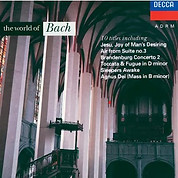
Johann Sebastian Bach
Toccata and Fugue in D minor, BWV 565
Performed by Peter Hurford.

The Nice
Rondo
From the album "The Thoughts of Emerlist Davjack".
Released on 1 March 1968.
"Rondo" is based around an extended quote and re-harmonization of the Dave Brubeck Quartet's "Blue Rondo à la Turk", and the organ solo includes a short excerpt from Johann Sebastian Bach's "Toccata and Fugue in D Minor" (04:36 min).

Beggars Opera
Raymonds Road
From the album "Act One"
Released in 1970.
"Raymond's Road" is a lengthy instrumental collage of classical pieces. Parade of classical pieces begin with Mozart’s “Rondò alla Turca” ( 01:07) and followed by “Toccata and Fugue in D Minor” (01:47) by Bach, “Rondò alla Turca” (06:52) again, a long interpretation of Sibelius’ “Karelia Suite” (07:03) and Rossini’s “William Tell ouvrture” (09:28). Song closes with “In the Hall of the Mountain King” (10:10) by Grieg.

Egg
Fugue in D Minor
From the album "Egg".
Released on 13 March 1970.
This is an interpretation of "Toccate and Fuge in D Minor.

Supertramp
Try Again
From the album "Supertramp"
Released on 14 August 1970. .
The song includes a sample (03:06 min)from Johann Sebastian Bach's "Toccata and Fugue in D minor" at around 05:36.

Blondie
No Exit
From the album "No Exit"
Released on 15 February 1999.
The song starts with an interpolation of Johann Sebastian Bach's "Toccata and Fugue in D minor" and interpolates Edvard Grieg's "In the Hall of the Mountain King" (02:13 min).
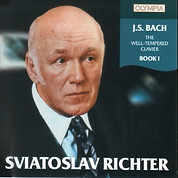
Johann Sebastian Bach
Prelude and Fugue: No. 1 in C Major, BWV 846
Performed by Sviatoslav Richter.

Procol Harum
Repent Walpurgis
From the album "Procol Harum"
Released in September 1967.
Procol Harum directly refers to the main theme of Bach's Prelude and Fugue: No 1 in C major at around 02:11 min.
Johann Sebastian Bach
Prelude and Fugue No.2 in C Minor, BWV 847
Performed by Sviatoslav Richter.

Yes
I See You
From the album "Yes"
Released on 25 July 1969.
Second half of "I see You", at around 04:40 min samples Bach's Prelude and Fugue: No. 2 in C Minor, BWV 847 (01:18 min).
Johann Sebastian Bach
Prelude and Fugue: No.6 in D Minor, BWV 851
Performed by Sviatoslav Richter.
Emerson Lake and Palmer
The Only Way
From the album "Tarkus"
Released on 4 June 1971.
"The Only Way (Hymn)" contains themes from "Toccata and Fugue in F major, BWV 540" (00:01 minutes) and "Prelude and Fugue VI, BWV 851" (02:26 minutes) by Bach, and features Emerson on the pipe organ at St Mark's church in Finchley, north London which was put down using a mobile recording facility.
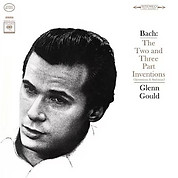
Johann Sebastian Bach
Invention No. 4 in D Minor, BWV 775
Performed by Glenn Gould.
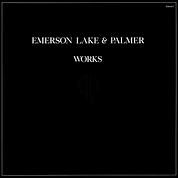
Emerson Lake and Palmer
Two Part Invention in D minor
From the album "Works Volume 1"
Released on 15 March 1977.
A slow tempo interpretation of J. S. Bach's Two Part Invention in D minor", arranged by Carl Palmer.