Rockin' Classics
Gustav Holst
Gustav Theodore Holst (born Gustavus Theodore von Holst; 21 September 1874 – 25 May 1934) was an English composer, arranger and teacher. Best known for his orchestral suite The Planets, he composed many other works across a range of genres, although none achieved comparable success. His distinctive compositional style was the product of many influences, Richard Wagner and Richard Strauss being most crucial early in his development. The subsequent inspiration of the English folksong revival of the early 20th century, and the example of such rising modern composers as Maurice Ravel, led Holst to develop and refine an individual style.
There were professional musicians in the previous three generations of Holst's family, and it was clear from his early years that he would follow the same calling. He hoped to become a pianist, but was prevented by neuritis in his right arm. Despite his father's reservations, he pursued a career as a composer, studying at the Royal College of Music under Charles Villiers Stanford. Unable to support himself by his compositions, he played the trombone professionally and later became a teacher—a great one, according to his colleague Ralph Vaughan Williams. Among other teaching activities he built up a strong tradition of performance at Morley College, where he served as musical director from 1907 until 1924, and pioneered music education for women at St Paul's Girls' School, where he taught from 1905 until his death in 1934. He was the founder of a series of Whitsun music festivals, which ran from 1916 for the remainder of his life.
Holst's works were played frequently in the early years of the 20th century, but it was not until the international success of The Planets in the years immediately after the First World War that he became a well-known figure. A shy man, he did not welcome this fame, and preferred to be left in peace to compose and teach. In his later years his uncompromising, personal style of composition struck many music lovers as too austere, and his brief popularity declined. Nevertheless, he was an important influence on a number of younger English composers, including Edmund Rubbra, Michael Tippett and Benjamin Britten. Apart from The Planets and a handful of other works, his music was generally neglected until the 1980s, when recordings of much of his output became available.
Source : Wikipedia

Gustav Holst, c. 1921 photograph by Herbert Lambert
The Planets, Opus 32
The Planets, Opus 32, Mars, The Bringer of War
The Planets, Opus 32, Venus, The Bringer of Peace
The Planets, Opus 32, Jupiter, The Bringer of Jollity
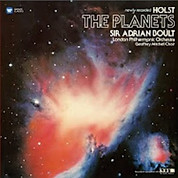
Gustav Holst
The Planets, Opus 32
London Philarmonic Orchestra and Geoffrey Mitchell Choir conducted by Sir Adrian Boult.

Jeff Wayne, Rick Wakeman, Kevin Peek
The Planets
From the album "The Planets"
Released in 1985.
"The Planets Beyond The Planets" is a rock interpretation of Holst's "The Planets" recorded in 1985, featuring the music of Jeff Wayne, Rick Wakeman and Kevin Peek, narration by Patrick Allen.

Tomita
The Planets
From the album "The Planets"
Released in 1976.
"The Planets" is an electronic interpretation of Holst's "The Planets".
Gustav Holst
Mars, The Bringer of War
The Planets Suite, Opus 32
London Philarmonic Orchestra conducted by Sir Adrian Boult.

Emerson Lake and Powell
Mars, The Bringer of War
From the album "Emerson Lake & Powell"
Released on 2 June 1986.
This is a keyboard dominated interpretation of "Mars, The Bringer of War" movement 0f The Planets suite.

King Crimson
The Devil's Triangle
I. Merday Morn
II. Hand of Sceiron
III. Garden of Worm
From the album "In the Wake of Poseidon"
Released on 15 May 1970.
This is a chaotic instrumental piece called "The Devil’s Triaangle", adapted from "Mars, The Bringer of War" part of "The Planets" suite. "The Devil's Triangle" employs a different staccato riff than the one from "Mars", a keyboard dominated interpretation of "Mars.

Savatage
Prelude to Madness, Hall of the Mountain King
From the album "Hall of the Mountain King"
Released on 28 September 1987.
The intro of "Prelude to Madness" features keyboards and guitar playing of "Mars, the Bringer of War" from Gustav Holst's suite, The Planets.
The song is an arrangement of Grieg's "In the Hall of the Mountain King" from the Peer Gynt suite.
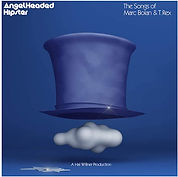
Emily Haines
Ballrooms of Mars
From the album "The Songs of Marc Bolan & T.Rex"
Released in September 2020.
This is a tribute album to Marc Bolan and T.Rex. In "Balrooms of Mars", ther are snippets from opening theme of "Mars, The Bringer of War" at 03:04 and 04:48.
Gustav Holst
Venus, the Bringer of Peace
From the The Planets suite, Opus 32
Performed by London Philarmonic Orchestra conducted by Sir Adrian Boult.

Supertramp
Fool's Overture
From the album "Even In the Quitest Moments"
Released on 8 April 1977.
The flageolet-sounding instrument plays a short excerpt (00:55 minutes) from Gustav Holst's "Venus", from his orchestral suite "The Planets".
Gustav Holst
Jupiter, The Bringer of Jollity
From "The Planets" suite, opus 32.
Performed by London Philaormonic Orchestra
Conducted by Sir Adrian Boult.

Yes
The Prophet
From the album "Time And A Word"
Released on 24 July 1970.
The song borrows a theme from "Jupiter, the Bringer of Jollity" from "The Planets" suite by English composer Gustav Holst, starting around 01:08 minutes.

Spectrum
Make Your Stash
From the album "Part One"
Released on 1 March 1971.
Openinng theme after 00:30 minutes is based on Gustav Holst's "Jupiter", from his orchestral suite "The Planets".